














































JFNA presses Democratic governors to embrace federal tax credit that could benefit Jewish day schools
State leaders would have to opt in to a new tax credit allowing parents to get financial assistance for students

Getty Images


 Add JewishInsider on Google
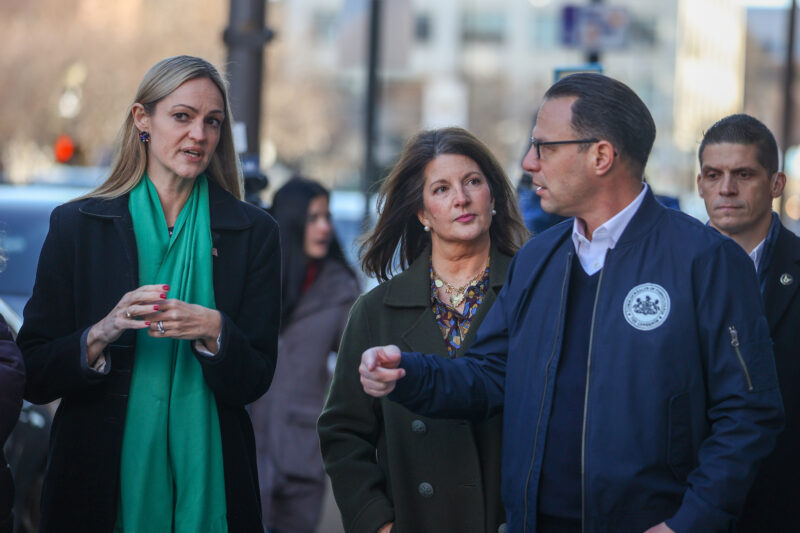
As governors from across the country convened in Washington over the weekend for the annual National Governors Association summit, representatives from the Jewish Federations of North America held dozens of sideline meetings with Democratic officials to lobby them on a new education tax initiative, Josh Nason, JFNA’s senior director of political affairs, told Jewish Insider.
Their goal was to educate those governors, some of whom were skeptical of the credit, and urge them to participate in the first-of-its-kind supplemental federal funding that could help pay for Jewish day school and yeshiva education.
Starting in the 2027 tax year, the federal Education Freedom Tax Credit, part of President Donald Trump’s One Big, Beautiful Bill Act, provides a dollar-for-dollar tax credit — up to $1,700 annually — for donations to approved Scholarship Granting Organizations. These SGOs offer scholarships for a variety of K-12 public and private education expenses, including private school tuition, transportation and tutoring.
If states don’t opt in, taxpayers can still donate, but residents of that state won’t have the ability to be beneficiaries.
“For Jewish day schools, it’s a huge opportunity,” Nason told JI following his meetings with both Democratic and Republican governors — the first time JFNA had a presence at NGA.
The credit differs from school-choice programs “in the sense that it’s not taking money out of public school funds,” said Nason. “It’s just a tax credit that people can put toward a school scholarship option. The advocacy that we’re doing is [to raise awareness that] any individual can make this donation and get the tax credit, but a state has to opt in in order for their [SGOs] to be eligible to receive the funds.”
While nearly all Republican governors have already opted in, their Democratic counterparts have been hesitant. Some critics have voiced concerns that the program has insufficient oversight against fraud or that it could divert public money to private schools. JFNA submitted written comments in December to the U.S. Department of the Treasury and the Internal Revenue Service regarding implementation of the tax credit.
Last month, Colorado Gov. Jared Polis became the first Democratic state leader to opt his state into the program. States have the next several months to choose to participate.
Nason said that in meetings with Democratic governors, “we heard a lot of interest in opting in.” Maryland Gov. Wes Moore, who serves as vice chair of the NGA, was among the officials JFNA met with.
“A lot of the Democratic governors are waiting to understand the implications, especially for IRS regulations,” continued Nason. “We certainly heard a lot of positive reactions to it and a lot of openness to understanding it. It was really productive and a good opportunity to educate them.”
While the Orthodox Union has been active for years in lobbying for Jewish day school affordability, JFNA has only started wading into the issue in recent months. Eric Fingerhut, JFNA’s CEO, raised the topic during the group’s inaugural “State of the Jewish Union” address last week.
Meetings with governors were just the beginning of JFNA’s advocacy for the tax credit. The group also recently started conversations in Jewish communities to raise awareness about the opportunity for prospective day school students.
“We at JFNA are leading the charge on this, but part of it is making sure there’s awareness out there,” Nason told JI. “We’ve been in touch with other partners. There’s significant interest from the denominations. We’ve had a generally positive response from everyone we’ve spoken to in the Jewish community as folks understand what can be done to make Jewish day schools more affordable. We are at the early stages of advocating for this.”
“We are doing outreach inside and outside the Jewish community,” said Nason.
While the education tax credit could help many more families send their children to Jewish schools — which cost an average of $35,000 per student annually — the program is “not really a Jewish communal issue,” he continued. “There are a lot of other religious groups in the country sending their kids to private schools, and we want to get public school parents to understand that this can benefit their schools as well.”
Jewish life in other areas could also be enhanced by the program, according to Nason, because “money coming into the system in other ways [allows for] more money in general that federations have to spend on projects.”
“This is a great opportunity for there to be funds available, and we would love to see all the states opt in,” he said. “For this program to be sustainable, it really needs to be nationwide. That’s the message we are sending.”
This story was updated on Feb. 23 to reflect that JFNA representatives met with both Democratic and Republican governors.
More Stories

priority check
Trump’s national security strategy balances global engagement with ‘high bar’ for intervention
TEXAS TALK
Two Republicans condemned by Jewish groups looking to make comebacks in Texas

COMMUNITY CONCERN
Jewish leaders, lawmakers, scramble to protect synagogues amid threatening anti-Israel protests
ON THE HILL
Foreign Affairs subcommittee hearing highlights Hezbollah disarmament challenges and opportunities for peace with Lebanon

exclusive
Schumer, Senate Democrats introduce resolution condemning Fuentes, Carlson

BISS' BACKTRACK
Daniel Biss reversed position on aid to Israel after launching congressional campaign
Please log in if you already have a subscription, or subscribe to access the latest updates.