




Murat Gok/Anadolu via Getty Images


 Add JewishInsider on Google
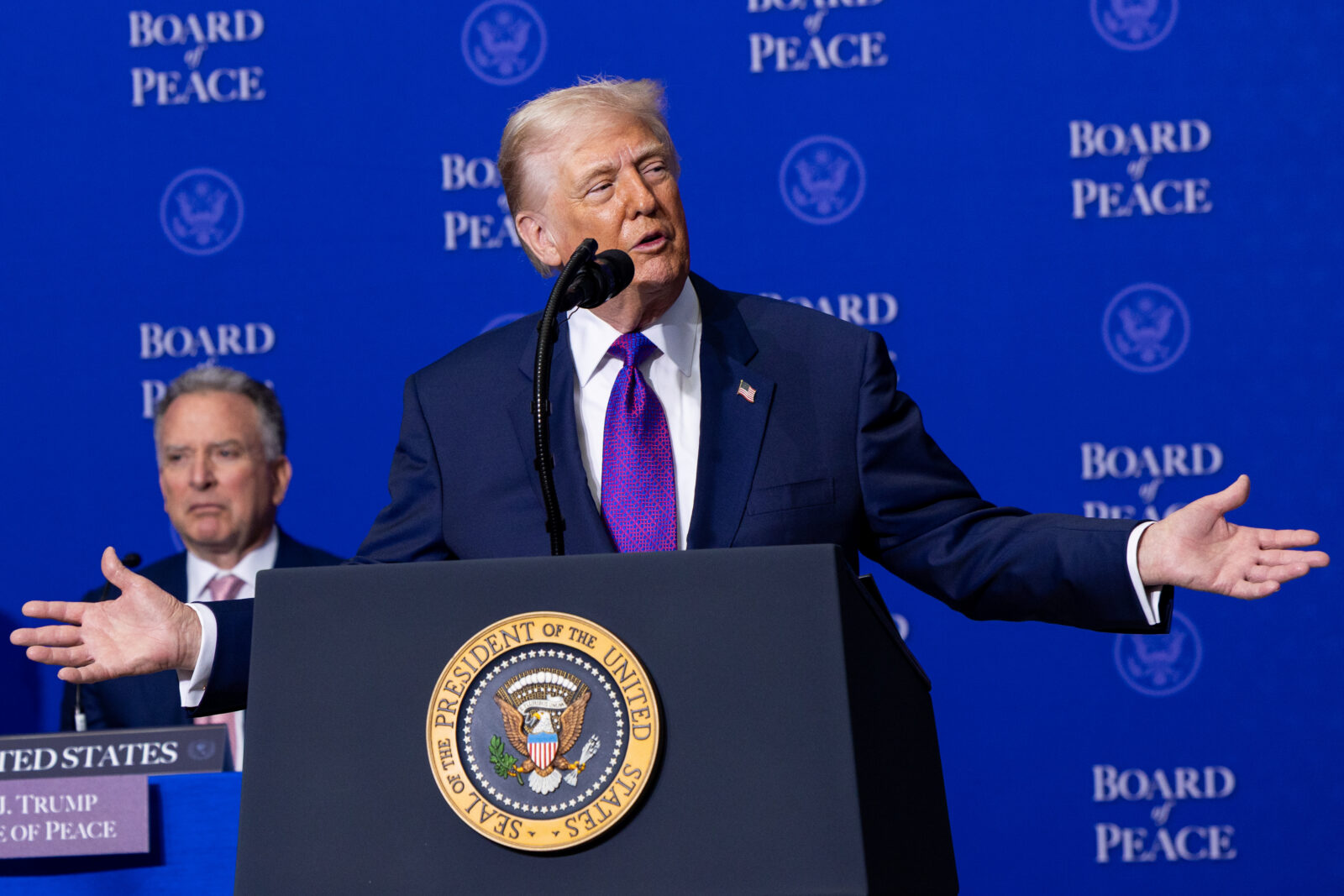
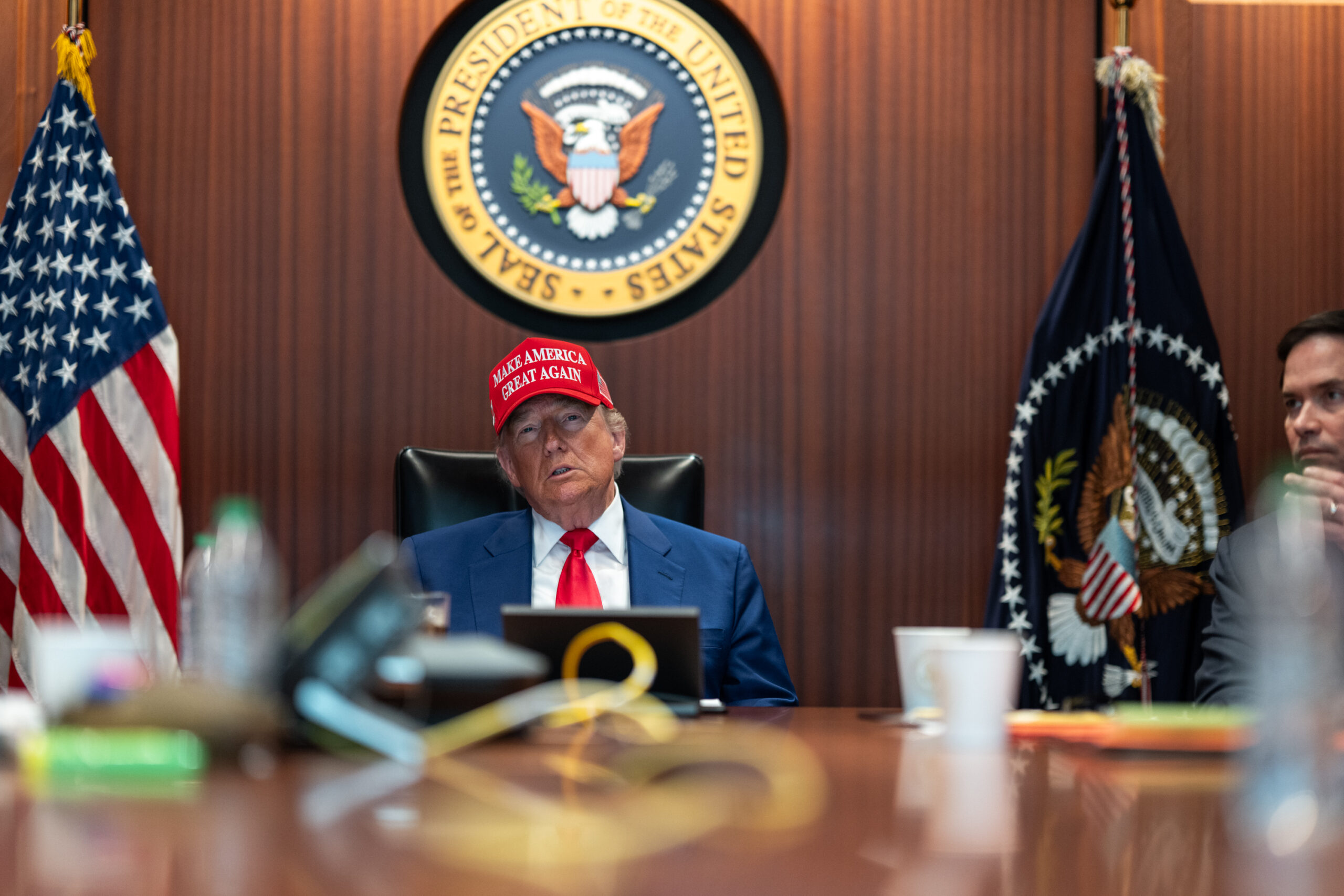
President Donald Trump is set to address Congress for his State of the Union speech tonight, with U.S. forces amassing in the Middle East and administration officials engaged in an ongoing flurry of diplomacy with the Iranian regime.
We’ll be watching for how Trump will address the situation with Iran in his speech, if at all. Will he set red lines or negotiate demands for the regime? Will he lay out his plan or goals for a potential military attack? The White House, as of now, isn’t previewing his remarks.
Trump took to Truth Social yesterday afternoon with a post rejecting as “fake news” reporting from a series of outlets that Gen. Dan Caine, chairman of the Joint Chiefs of Staff, had raised concerns about a sustained military campaign against Iran.
The president said that Caine “like all of us, would not like to see War” but also believes that a military conflict would be “easily won.” Although talks have reportedly centered around limits on Iran’s nuclear program, Trump continued to insist that the regime’s nuclear development is “no longer, but rather, was blown to smithereens.” He called reports that the administration is considering limited strikes on Iran “fake.”
It’s not out of the question that Trump, who loves a made-for-TV moment, breaks major news on Iran during the speech — last year, he announced in the middle of his speech that the U.S. had apprehended a terrorist allegedly involved in the bombing that killed 13 U.S. servicemembers during the pullout from Afghanistan.
On the other hand, Trump might steer clear of the topic entirely as he focuses on domestic issues dominating the headlines, such as tariffs and immigration.
We’ll also be keeping an ear out for whether Trump tries to draw any boundaries for the conservative movement on Israel policy and antisemitism in his speech. The president has largely stayed out of the ongoing fight over Israel roiling the right, but the GOP’s most prominent Israel critic, Tucker Carlson, visited the White House on Monday after an interview with U.S. Ambassador to Israel Mike Huckabee that grabbed headlines.
Gov. Abigail Spanberger of Virginia is set to deliver the Democratic rebuttal to Trump’s speech — making her the second of a class of female Democrats with national security backgrounds to deliver the response in two years, following Sen. Elissa Slotkin’s (D-MI) remarks last year.
Despite Slotkin’s expertise, her speech last year was fairly light on foreign policy, and it remains to be seen whether Spanberger will follow that approach.
Rep. Summer Lee (D-PA), among the most strident Israel critics in the House, is set to deliver a response on behalf of the progressive Working Families Party.
On the Democratic side of the chamber, don’t expect to see a repeat of last year’s rowdy response from the crowd — Democratic leaders are urging members to avoid disruptive protests during the speech, such as attempting to interrupt Trump.
And a growing number of Democrats, mostly progressives, including several Senate Democrats with potential presidential ambitions,are set to skip the speech entirely, in some cases attending or speaking at counter-programming events being hosted by liberal groups.

PRAKASH SINGH/AFP via Getty Images
Indian Prime Minister Narendra Modi is set to arrive in Israel on Wednesday to address the Knesset and head an innovation event in Jerusalem, as part of what Israeli Ambassador to India Reuven Azar told Jewish Insider is an “upgrade” in relations between the countries “to a new, strategic level.”
The visit of the head of the world’s most populous nation, whose relations with Israel have grown stronger since Modi became prime minister in 2014, has important implications for the Jewish state’s security, geopolitics and trade, Azar said.
Modi last visited Israel eight years ago. At the time, a photo of the Indian leader and Israeli Prime Minister Benjamin Netanyahu wading barefoot in the Mediterranean Sea during a visit to a desalination plant went viral.
His trip this week, during which he will address Israel’s Knesset, comes amid rising tensions across the Middle East — and as Israelis prepare for a potential attack from Iran.
India has been the Israeli defense industry’s largest customer in recent years, with arms sales totaling $20.5 billion during 2020-2024. The countries have reportedly closed deals worth $8.6 billion since the beginning of 2026.
During his visit, Modi plans to sign an “updated security agreement to allow the private sector to work on more sensitive products when it comes to joining production,” Azar, who has been Israel’s envoy to India since September 2024, said. “The updated protocols will allow us to work on more sensitive technology. It will create a lot of action.”
Netanyahu and leading Israeli defense figures have spoken about moving toward greater self-sufficiency in arms manufacturing. Delhi has long had a “Make in India” campaign to increase local production, requiring Israeli arms companies to open production lines in India in order to sell to the country, and the agreement means that joint production “will get a significant upgrade, because we are expanding both the scope and range of technologies we can apply,” Azar said.
“Both Israel and India want to be more independent and self-reliant when it comes to production and less reliant on foreign supply. Producing things together means that, during times of need, we can supply things to each other, unlike what happened during the war [in Gaza] … in which we had interruptions in supply from different countries,” Azar said.
Economically, Israel and India are working on a free-trade agreement, and hope to expand their cooperation on emerging technologies, as well as large infrastructure projects. Azar said that he worked to bring Indian companies to bid on tenders relating to the ongoing Tel Aviv Metro subway project, and that 15 have already applied.
The U.S. has long expressed concern about security risks related to Chinese companies working on major infrastructure projects in Israel. Companies from India, which views China as an adversary, have been considered as a potential competitive alternative.
Though Azar, a former deputy national security advisor for foreign policy, served as head of the Israel-U.S.-China Internal Task Force Israel’s Foreign Ministry at the beginning of the decade, he declined to comment on that aspect, preferring to focus on Israel-India bilateral relations.
With regard to the India–Middle East–Europe Economic Corridor (IMEC), a trade route meant to pass through Israel, among other countries in the region, and compete with China’s Belt and Road Initiative, Azar said that “we need to wait for the right geopolitical moment to make it happen. … It needs to happen, but evidently, it won’t now.”

“Currently, there is some movement of merchandise, but to see it become massive, we need some change in Saudi Arabia,” Azar said.
Saudi Arabia and the U.A.E., both points on the IMEC route, are facing increased tensions between them. Riyadh has pointed some of its ire at Jerusalem, and has been growing closer to India’s historic foe, Pakistan.
Azar was enthusiastic about an Israeli Cabinet decision approved on Sunday in which Israel plans to allocate over $48 million to cooperation with India in a variety of spheres. Half of the funds come from individual government ministries seeking the cooperation, and the other half was specially allocated by the Finance Ministry.
“The most important is upgrading research and development with funds from the Israel Innovation Authority, and academic cooperation. Israeli universities are all over India now, getting into agreements to exchange students and transfer technology and innovation offices. They feel very welcome in India,” he said.
Asked if that means India has become an alternative to much of the West, where Israeli academics have faced hostility in recent years, Azar said that India and Israel “don’t have challenges in this realm and continue working together to discover the joint resilience so needed in times of war.”
At the same time, he added, “it’s important for any country to diversify. We feel we have so much in common with India, which is a rising force in the world. It’s natural, and it’s not only Israel. Last week, 20 heads of state and 50 foreign ministers went to an AI summit in India. … Everybody is chasing India now.”
Though India-Israel relations were worse before Modi’s rise, Azar said they have the potential for longevity.
“We are now building the pillars of relations that are going to last,” he said. “We are trying to get bipartisan support. There is a lot of support for Israel, not just in [Modi’s Bharatiya Janata Party]. The general public feels it, and we have a high appreciation of that. There are some parties, like the communists, that are more critical, but I think this relationship is going to last.”

Courtesy
Progressive activist Sue Altman shook up the race in New Jersey’s 12th Congressional District earlier this month when she announced she was entering the already packed field of Democratic candidates to replace retiring Rep. Bonnie Watson Coleman (D-NJ) in the House.
Altman ran as a pro-Israel progressive when she was the Democratic nominee in the neighboring district, where she lost to Rep. Tom Kean Jr. (R-NJ). She served as Sen. Andy Kim’s (D-NJ) state director before announcing her campaign to succeed Watson Coleman in a district that’s decidedly more liberal than Kean’s.
The question remains whether Altman will re-calibrate her views on Israel as she seeks to win a crowded Democratic primary in a farther-left district. In audio shared by the far-left publication Drop Site, Altman said she’s reassessing elements of her position toward Israel from 2024 and working on a new position paper.
“A lot has happened since then. It has been a horrific tragedy,” Altman said, in an unknown setting. “I always looked up to Israel as a young person. … Israel is an important ally to the United States, but what has happened in Palestine is just horrific, and I don’t want our taxpayer money being used to kill children and women who are innocent.”
She said that people she’s spoken to feel that the war in Gaza is a “betrayal that they feel is beyond the pale.” (The war had been taking place for nearly a year when she ran for Congress in the 2024 cycle.)
Altman also said she believes that “[Israeli Prime Minister Benjamin] Netanyahu and the State of Israel are not one and the same and that there’s nuance on all sides here.”
She said she would be “at least as far left as [former Rep. Tom Malinowski, the Democrat who lost his seat to Kean in 2022] if not more so” on the issue, and said she expected AIPAC and other groups might come after her, as AIPAC did with Malinowski in the recent special election in New Jersey’s 11th Congressional District.
“AIPAC and countless SuperPACs are destroying our democracy by polarizing and misleading the public,” Altman said on X last week. “They tried (and failed!) in NJ-11, and now they’re trying again in [Illinois]. We need to get dark money out of politics to prevent billionaires from controlling us and getting richer!”
In the comments released by Drop Site, however, Altman appeared to mischaracterize Malinowski’s stated position. Malinowski did not rule out supporting special, specific conditions to be applied only to aid to Israel. Altman claimed that Malinowski was only seeking to enforce existing conditions that apply to all U.S. aid globally — which already apply to aid to Israel — and that AIPAC had come after him for that stance.
Middle East politics have already entered the race in other ways, with Watson Coleman saying she would not weigh in on the race other than telling voters not to support East Brunswick Mayor Brad Cohen, who is Jewish, calling him a “hard-line supporter” of Netanyahu.
Cohen held a substantial fundraising lead as of the end of the year — though he was surpassed by Altman in her first day in the race — and is likely to receive the support of the Middlesex County Democratic establishment. Middlesex voters made up around 40% of the district’s voter population in recent elections, according to Micah Rasmussen, the director of the Rebovich Institute for New Jersey Politics at Rider University.
Also running are other local officials, including Plainfield Mayor Adrian Mapp and state Rep. Verlina Reynolds-Jackson, both of whom are likely to pick up the support of local Democratic officials in their areas.
The candidacy of Adam Hamawy, a physician and veteran who volunteered as a doctor in Gaza and has been an acerbic critic of Israel, could be of particular concern to the district’s Jewish community.
Dan Cassino, the executive director of the Fairleigh Dickinson University poll, said that Altman became the immediate front-runner upon entering the race, and that her biggest weakness in the 7th District, where she was perceived as too liberal to win a swing district, will not be an issue in this district.
“She can also raise lots of money, which might help to box out some other potential challengers, as it did when she ran in the 7th last cycle,” Cassino said.
Rasmussen said that Altman is hoping for a “divide-and-conquer” strategy — relying on other candidates such as Cohen, Mapp and Reynolds-Jackson to be siloed in their counties and hoping she’ll be able to win support across county lines.
Rasmussen added that if Altman is able to turn out progressive voters like Analila Mejia did in the 11th District special election primary, she’d be well-positioned to win.
But, unlike Mejia, who ultimately had the progressive lane largely to herself in the 11th District, Altman will have serious competition, including Reynolds-Jackson and Hamawy.
“What we don’t know is, are they going to have to share [the progressive lane] or is [Altman] going to be able to consolidate?” Rasmussen said. “You can have a really solid progressive record, but get out-organized and out-worked, then that record won’t count for much. … What Altman has in common with Mejia is both are organizers in that movement, know who to reach and how to fire them up and get them interested in voting.”
He said that attacks on Altman as a carpet-bagger don’t seem especially viable, noting that they were not particularly salient against Malinowski in the 11th District special election, and the district is already large and geographically diverse.
Among the field of nearly 20 candidates, Rasmussen said that Hamawy would be the one he would assess as most likely to have a surprise breakout from the field in a way similar to Mejia in the 11th District. “Given his very interesting life story, his very interesting professional background, I would say there’s a chance that captures people’s attention, that captures people’s interest.”
Generally, Rasmussen said, the county Democratic establishment might be able to push a favored candidate, such as Cohen, over the line but it will take serious dedication and effort, which is not guaranteed. Recent elections have shown the establishment no longer has the heft it once did.
Tom Williams/CQ Roll Call/Bloomberg via Getty Images
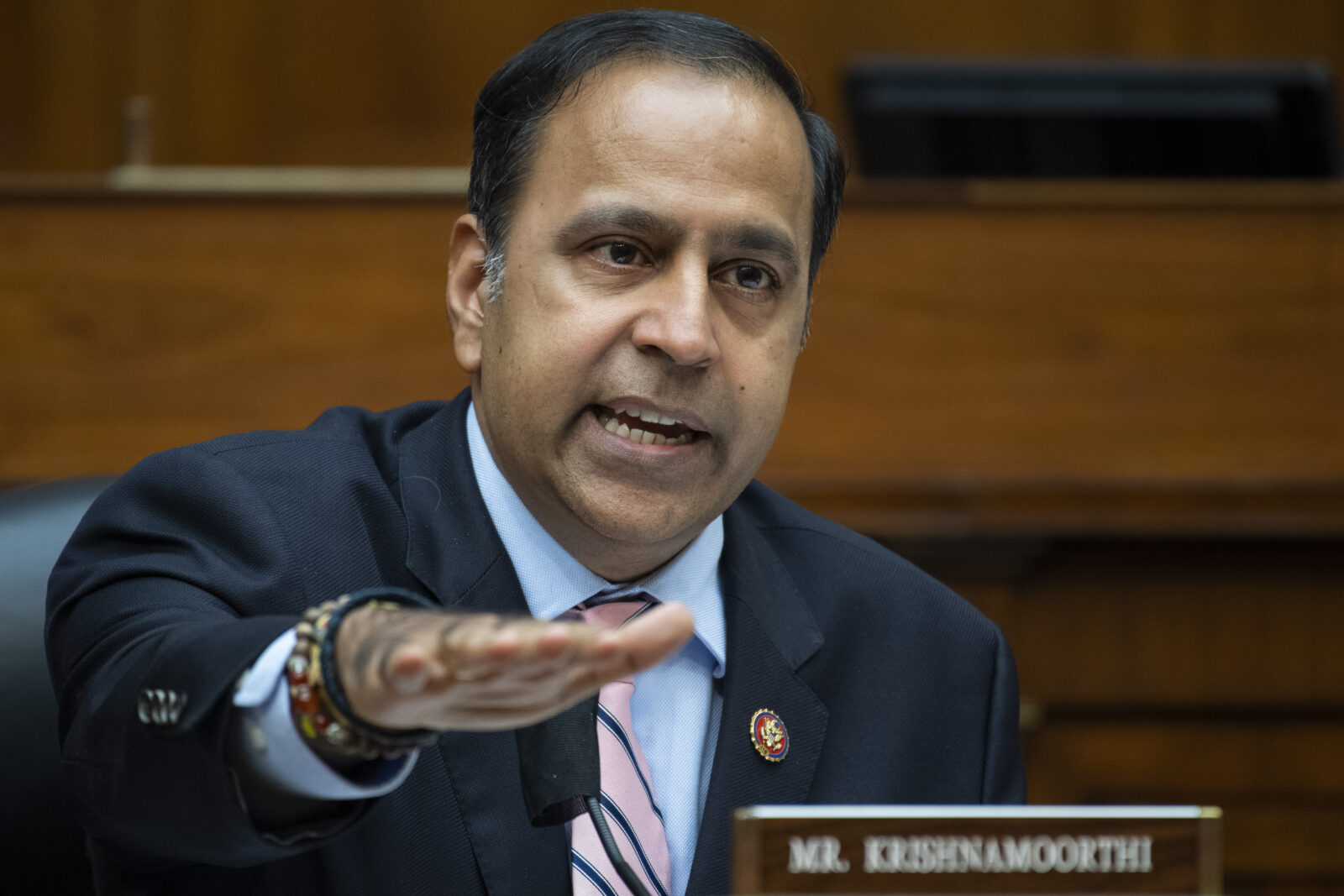
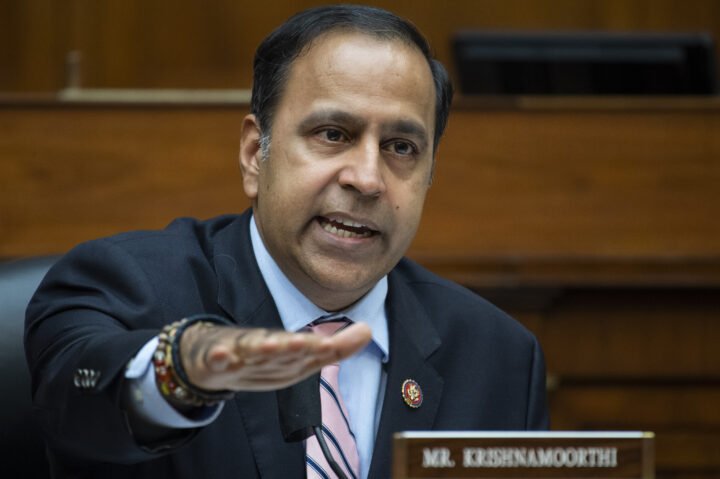
Democrats running for the open Senate seat in Illinois are increasingly trying to differentiate themselves on Israel policy ahead of next month’s primary. In the final weeks of the campaign, Illinois Lt. Gov. Juliana Stratton appears to be trying to straddle a line on Israel policy between Rep. Raja Krishnamoorthi (D-IL), who has a largely pro-Israel record, and Rep. Robin Kelly (D-IL), who has been increasingly critical of Israel.
Stratton, of the three, has the least established record on Middle East policy issues, and her approach was on display at a debate last week with fellow candidates, where she did not offer direct answers to questions on whether additional conditions should be applied to U.S. aid to Israel or whether the war in Gaza constituted a genocide.
Asked about conditions on aid to Israel, Stratton said that the “devastation” both on Oct. 7, 2023, and during the ensuing war in Gaza has been “horrifying” and she wants to “see the suffering end.”
“I can tell you that as our democratic ally in the Middle East, I believe that Israel has a right to safety and security, but at the very same time, I totally disagree with the way that [Israeli Prime Minister Benjamin] Netanyahu has responded to those attacks, and I believe that he should be removed from power, or he should step down, and there should be elections, as the people have been calling for,” Stratton said.
Israel is set to go to elections in October.
Stratton also called for aid to Gaza and for Palestinian leadership that can push toward a two-state solution.
Asked whether she would vote for a resolution led by Rep. Rashida Tlaib (D-MI) describing the war in Gaza as a genocide, Stratton said the war was “devastating and it was horrific” and that “we must do everything we can to make sure that we can be on a real, sustained path to peace,” but avoiding directly answering the question.
Krishnamoorthi emphasized that U.S. aid to Israel and all other allies is already subject to various conditions, which he said should be enforced. He “strongly condemned” both Hamas for the Oct. 7 attacks and Netanyahu for Israel’s conduct during the war.
“We need to take the next step,” Krishnamoorthi said. “That means Israel needs to withdraw from the Gaza Strip. Hamas needs to be demilitarized. An international stabilization force has to arrive, and then massive construction aid has to come in, to the point where we have a chance at a road to a two-state solution of Palestinian and Israeli states living side by side.”
When asked about classifying the war as a genocide, he said that the parties in the region “don’t agree on a credible assessment of what exactly happened” and suggested that debate over or the use of the term would be an obstacle to progress in the ceasefire agreement first implemented in October 2025.
“I want to see the language [of the Tlaib resolution], but I need to be comforted right now that this type of resolution doesn’t get in the way of progress right now for Gazans, because right now they’re going through hell as it is, and we got to get to a better place,” he responded, when pressed on whether he would vote for the Michigan congresswoman’s resolution.
Kelly touted her support for the Block the Bombs Act that would place sweeping restrictions on U.S. arms sales to Israel, and joined Stratton in calling for Netanyahu to resign, calling his leadership a “reign of terror.”
“A lot of people would say what happened on Oct. 7 was horrible, but there were a lot of things that happened before Oct. 7 also,” Kelly said. “I’m the only one on this stage that supported something like Block the Bombs and I’m the only one on the stage that said, it may not have started off like this but … genocide was the result.”
All three candidates said that a preemptive U.S. strike on Iran without congressional authorization would be illegal.
Krishnamoorthi emphasized that Iran cannot obtain a nuclear weapon, but argued that the U.S. must find a diplomatic solution to address the Islamic Republic’s nuclear and ballistic missile programs.
He added that any military action must be authorized by Congress and that he plans to support an upcoming war powers resolution to block military action against Iran without such authorization.
Stratton said that “we certainly don’t want to see a nuclear Iran … but what we also can’t have is a president who just decides whenever he gets a whim … and threatens to strike or commit some act of war. We need Congress to rein him in.”
Kelly accused Trump of seeking out war as a “distraction” from alleged failures on the home front, and demanded a diplomatic path using any tools and partners available.
Stratton is supported in the Senate race by Gov. JB Pritzer, who last week condemned AIPAC as a “pro-Trump organization.”
A Democratic strategist in the state said that it’s hard to tell where the race stands, but that public polling has put Krishnamoorthi in the lead. He noted that Krishnamoorthi is running an ad contrasting him with Stratton, indicating his campaign thinks Stratton may be making up some ground.
Pritzker’s super PAC recently began spending big backing Stratton and attacking Krishnamoorthi.
The strategist said that Kelly hasn’t been keeping up with the other two candidates in television advertising, but there are still opportunities to make up ground and increase her vote share. Kelly has largely been trying to court the most progressive voters and carve out the left-most lane for herself, but otherwise, the strategist said, there’s been little ideological difference among the candidates overall.
Jemal Countess/Getty Images for Protect Borrowers
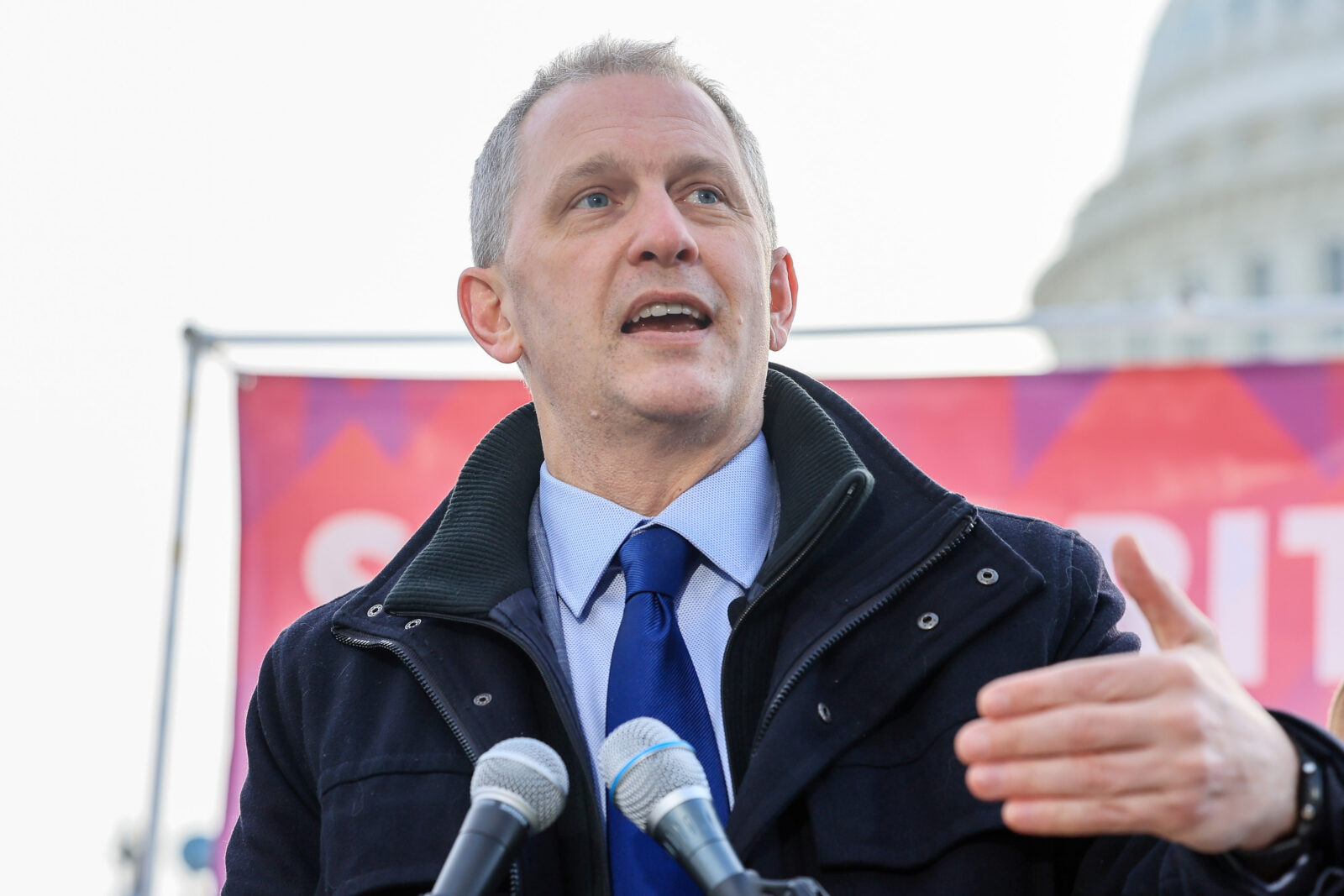
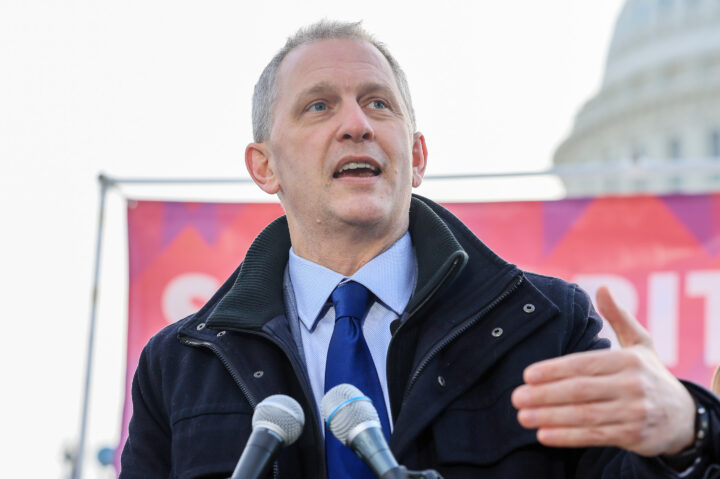
Rep. Sean Casten (D-IL) and 25 Democratic co-sponsors introduced a bill on Monday that would implement wide-ranging new conditions and restrictions on U.S. aid to Israel.
The Ceasefire Compliance Act would require the administration to assess and report to Congress every 90 days on whether Israel is complying with the October 2025 ceasefire agreement in Gaza, including halting military operations and bombing campaigns.
The legislation does not appear to contain exceptions for the strikes Israel has taken in retaliation for Hamas’ own violations of the ceasefire deal, nor mention its targeting of individual Hamas leaders.
Under the terms of the legislation, if Israel does not meet the conditions included in the law, the U.S. would be banned from selling or transferring any U.S. military systems to Israel for use in Gaza or the West Bank, any further transfers would be subject to a specific agreement by Israel that the weapons would not be used in Gaza or the West Bank and the administration would be required to reach an agreement with Israel that U.S.-origin systems already in Israel’s possession would also be banned from use in Gaza or the West Bank.
Those restrictions would remain in effect until Israel is in compliance with all conditions. The legislation establishes an end-use monitoring group within the administration to monitor whether U.S.-provided systems are in use in Gaza or the West Bank.
The legislation includes language guaranteeing that U.S. defensive assistance to and intelligence sharing with Israel, as well as provision of missile-defense systems to Israel, are exempt from the conditions. The bill would sunset after five years.
Other conditions would require Israel to work to implement President Donald Trump’s 20-point peace plan; allow humanitarian aid into Gaza; cooperate in the establishment of a temporary Palestinian government and ultimately a Palestinian Authority government in the West Bank; take “material steps” to prevent settler attacks on Palestinians in the West Bank; and ban any forcible displacement of Palestinians from Gaza, annexation of Gaza or “de facto or de jure annexation” of any part of the West Bank.
The Israeli government, and a broad swath of Israeli society, oppose the establishment of a Palestinian Authority government in Gaza given the group’s ongoing payments to the families of terrorists, among a raft of other concerns.
“As one of the United States’ most important allies, Israel must ensure that its policies and the use of U.S. military assistance align with American values, interests, and the law,” Casten said in a statement. “That starts with requiring compliance with the October 10, 2025, ceasefire agreement and the steps laid out in the 20-point plan, curbing settler violence, and rejecting annexation in the West Bank.”
The legislation includes a limited presidential waiver of the conditions for transfers and sales “vital to the national security of the United States.” The president would be required to provide a detailed justification to Congress 15 days before invoking such a waiver explaining why it is necessary and unavoidable.
“This bill redefines the system of US military aid to Israel, transforming it from a blank check to an accountability-based system that advances US strategic interests in the Middle East, aligns with American values, enhances Israel’s security, and protects Palestinian civilians,” a release by Casten’s office about the bill states. “Through thorough oversight and tough enforcement mechanisms, it makes clear that actions undermining shared U.S. and Israeli interests and values will have consequences.”
The bill is co-sponsored by Reps. Madeleine Dean (D-PA), Veronica Escobar (D-TX), Chris Deluzio (D-PA), Becca Balint (D-VT), Jim McGovern (D-MA), Jan Schakowsky (D-IL), Ro Khanna (D-CA), John Garamendi (D-CA), Don Beyer (D-VA), Jill Tokuda (D-HI), Lloyd Doggett (D-TX), Valerie Foushee (D-NC), Mike Thompson (D-CA), Sylvia Garcia (D-TX), Doris Matsui (D-CA), Derek Tran (D-CA), Emily Randall (D-WA), Jared Huffman (D-CA), Mark Takano (D-CA), Troy Carter (D-LA), Chellie Pingree (D-ME), Bonnie Watson Coleman (D-NJ), Marcy Kaptur (D-OH), Betty McCollum (D-MN) and Joaquin Castro (D-TX).
The legislation also includes specific language emphasizing that the administration has no authority to transfer U.S. funds to the Board of Peace — after Trump pledged a $10 billion U.S. commitment last week — or to provide the Board of Peace with authorities that “[supersede] the role or authorities of the United Nations.”
One source familiar with the situation told Jewish Insider that J Street, which is backing the bill alongside New Jewish Narrative and Foreign Policy for America, is making the legislation its top priority. The group is holding a conference in Washington later this month.
“The Ceasefire Compliance Act puts into law the common sense principle that American weapons cannot be used by the Israeli government in Gaza and the West Bank in ways that fundamentally violate American values and directly contravene U.S. interests,” J Street President Jeremy Ben-Ami said in a statement. “US assistance — whether aid or arms — should never come as a blank check. The CCA will ensure the Israeli government is held to agreements it has signed and abides by the ceasefire, allows a Palestinian governing council to take control of Gaza, and cannot annex the West Bank.”
Though the bill is unlikely to pass Congress under Republican control, it could provide a model for Democrats critical of Israel shy of the terms of the Block the Bombs Act and other efforts to impose a full offensive arms embargo on the Jewish state.

Selçuk Acar/Anadolu via Getty Images
A bill introduced in the New York City Council in response to pro-Hamas demonstrations outside New York synagogues has sparked a battle between mainstream Jewish advocacy organizations and protest groups and their allies — and leaves New York City Mayor Zohran Mamdani and the NYPD in an awkward spot.
At the center of the agenda to counter antisemitism that Council Speaker Julie Menin unveiled in January was her proposal directing the NYPD to establish a plan for “security perimeters,” demarcated with police barriers or tape, up to 100 feet from entrances and exits at religious facilities to prevent protesters from obstructing or harassing people attempting to enter or exit.
In response to feedback from the police department, the speaker’s office stripped out any specific reference to distance, and a new draft of the bill simply compels Commissioner Jessica Tisch to propose her own plan for “buffer zones” of sizes she deems appropriate “to address and contain the risk of injury, intimidation, and interference, while preserving and protecting protest rights.” Like the previous bill, the zones in the updated legislation could extend from both doorways and driveways.
The measure faces its first hearing in the council on Wednesday, but it has already accentuated and even deepened the split between long-standing Jewish institutions and the activist forces that elevated Mamdani to power last fall.
“Access to religious institutions must be protected so that people can enter their houses of worship without fear of harassment or intimidation,” said Eric S. Goldstein, CEO of the UJA-Federation of New York, which has sought to organize Jewish communal support for the bill. “Speaker Menin’s proposal advances that goal through a carefully designed framework that appropriately balances First Amendment rights with safety and prevention,” Goldstein said.
By contrast, a bevy of far-left groups — Jews For Racial & Economic Justice, the American Council for Judaism, Jewish Voice for Peace-New York City and IfNotNow NYC — several of which have ties to the mayor, collectively denounced Menin’s legislation earlier this month.
“The right to protest in this country is sacrosanct and must be protected,” the organizations said in a joint statement, arguing that the synagogues at the center of recent demonstrations had hosted “non-religious political events” — namely, for groups encouraging and facilitating immigration to Israel — that made them legitimate targets. “We urge our city leaders to take seriously that a free and open democracy is essential towards ensuring the safety of all New Yorkers, including Jewish communities.”
The Menin bill is distinct from Gov. Kathy Hochul’s push for 25-foot buffer zones around houses of worship, which would subject violators to criminal penalties, or from calls for similar actions on the national level. A corollary piece of City Council legislation, introduced by Councilmember Eric Dinowitz, would establish similar perimeters around educational institutions.
Alyza Lewin, president of U.S. affairs for the Combat Antisemitism Movement, noted that the Supreme Court had upheld electioneering laws barring campaign activity within 100 feet of polling places.
“It really shouldn’t be so controversial,” Lewin told JI. “They determined that setting up a 100-foot zone around the polling place did not impermissibly interfere with the speech rights of those campaigning. You have a similar situation here. And here you’re talking about a constitutionally protected right to the free exercise of religion.”
The speaker’s office acknowledged it had looked to the high court precedent Lewin cited while crafting the legislation. But Menin’s team stressed to Jewish Insider that the bill would not prohibit protesting within the buffer zones.
Menin’s office maintained that the legislation would compel the police department to have an official, public protocol for ensuring access and egress at places of worship during demonstrations.
“It does not limit protest activity,” said Menin spokesperson Henry Robins. “The bill directs the NYPD to develop and publish a plan to ensure individuals can safely enter and exit these institutions without harassment or obstruction, while fully respecting First Amendment rights.”
Mamdani has declined to express his opinions on the proposal from Menin, a Manhattan Democrat and the first-ever Jewish council speaker, frequently seen as representing moderate elements of the party that opposed his election. He has instead alluded to vague “concerns” with the proposal from Tisch, a scion of one of the city’s most prominent Jewish families and a holdover from his predecessor’s administration.
However, multiple sources asserted that concerns from the NYPD were not constitutional but logistical.
Moreover, former Mayor Eric Adams signed an executive order in December that directed the NYPD to consider instituting zones limiting protest from 15 to 60 feet from the doorways of religious facilities. Moshe Davis, who headed the Mayor’s Office to Combat Antisemitism under Adams, said his team developed this directive in concert with the NYPD and the city Law Department, which have not changed under the new administration.
Mamdani repealed Adams’ order, along with others the outgoing mayor signed just before his term ended, his first day in office — but then signed an identical decree into effect. His office did not respond to requests for comment from JI.
Menin’s bill currently has 20 co-sponsors, six short of the majority needed for passage. However, 34 of the 51 members of the council would need to back the bill to override a mayoral veto.
Speaking to Jake Tapper on CNN Monday night, Mamdani said he would reserve comment until his administration had conducted a legal review.

Vernon Yuen/NurPhoto via Getty Images
A prominent Jewish Chicago-area Democratic donor and philanthropist lamented rising anti-Israel sentiment and antisemitism after a progressive Illinois congressional candidate issued a public statement saying he would reject the donor’s contribution to his campaign due to his ties to AIPAC.
Union organizer Anthony Driver Jr. is running in Illinois’s 7th Congressional District, on a platform critical of Israel and in opposition to AIPAC. He said in a statement that he would return a contribution by Michael Sacks, a local Jewish, pro-Israel philanthropist and Democratic donor who had been a prominent supporter of former President Barack Obama and close ally to Chicago Mayor Rahm Emanuel.
“Michael Sacks has supported community violence intervention work in Chicago for years. I served nearly four years as President of the Chicago Community Commission for Public Safety and Accountability, helping advance real public safety reform,” Driver said. “The first time I heard about any link between Michael Sacks and AIPAC was on the debate stage. As I said on that same stage, I will return the contribution.”
Sacks, in response, pointed to public anti-Israel and antisemitic currents as pushing Driver, who has been endorsed by the Congressional Progressive Caucus PAC, to take such a position.
“It is truly sad there is so much anti-Israel sentiment and outright Jew hate that Anthony found himself in this position,” Sacks said in a statement to the Chicago Tribune. “I can only hope that the electorate rejects hate in all forms.”
Sacks said he asked Driver to contribute the donations to a community violence prevention group of his choosing, calling Driver a “pragmatic [progressive]” and praising his work on violence reduction.
On the campaign trail, Driver has railed against AIPAC and spending by its super PAC, supporting one of his rivals, Chicago Treasurer Melissa Conyears-Ervin. Conyears-Ervin faced attacks by several of her opponents about her support from AIPAC’s super PAC during a candidate forum last week.
Driver also states on his campaign website that he supports efforts to restrict offensive weapons transfers to Israel, including the Block the Bombs Act, and the recognition of Palestinian right of return.
Driver’s unwillingness to even accept support from a pro-Israel donor underscores the deepening hostility to Israel and its supporters in certain Democratic circles. As part of their anti-Israel campaign, progressives are working to make campaign contributions from individuals who have supported pro-Israel causes unacceptable — even if they haven’t been directly connected with AIPAC.
Alex Kraus/Bloomberg via Getty Images
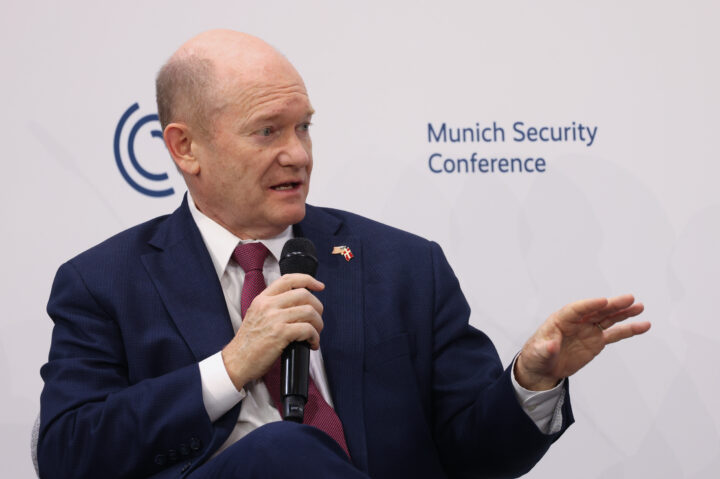
Sen. Chris Coons (D-DE), one of the leading foreign policy voices in the Democratic Party’s moderate wing, expressed concern over the weekend that any White House decision to move ahead with military action against Iran would deeply alienate leading European allies of the United States.
“There are pretty stark early warning signs of some challenges where core allies do not share our priorities,” Coons told Jewish Insider following a weeklong trip to Europe, which included stops at the Munich Security Conference, along with meetings in Ukraine and Moldova with top European diplomats.
“It leaves me genuinely concerned that if Trump goes ahead with a strike against Iran, it is not going to enjoy support from any of our core allies,” he continued. “That will make it harder, and it may deepen this growing challenge for us.”
Asked how he would like to see the Trump administration address the Iranian regime’s violent crackdown on protesters and its nuclear program, Coons urged the president to work with close allies to “ramp up pressure” on Tehran and explain his approach to the public. The Delaware senator also encouraged Trump to include Congress in his deliberations.
“A) Consult Congress. B) Make a case to the American people about why this is in our national security interest,” Coons said. “C) Clarify what on earth he’s planning with this Board of Peace, which just launched with a massive pledge from the United States that none of us had heard of before he announced it,” he said, ostensibly referring to the $10 billion financial commitment Trump made to Gaza’s reconstruction. “And D) If he’s going to work with close allies to ramp up pressure to try and achieve something at the negotiating table, he should work with close allies.”
“He shouldn’t just fire off a bunch of missiles and assume that that’s going to be enough to achieve the result he wants,” he added.
Coons also highlighted growing transatlantic tensions over potential U.S. military action against Iran during discussions with European officials, who expressed worries about a brewing U.S.-U.K. dispute tied to the Chagos Islands.
The remote British Indian Ocean Territory is at the center of a 2025 agreement in which the U.K. agreed to transfer sovereignty of the island chain to Mauritius while securing a 99- or 100-year lease for the strategic Diego Garcia military base, a joint U.S.-U.K. facility long used by American forces.
The Trump administration initially signaled support for the deal, with the State Department affirming it last Tuesday. But one day later, President Donald Trump publicly urged Prime Minister Keir Starmer to scrap the arrangement and retain full control of the “strategically located” base, warning it could be needed if diplomacy with Iran fails.
The Times of London reported Thursday that the British government had informed Washington that week it would not permit U.S. strikes on Iran from Diego Garcia or the Royal Air Force’s Fairford station, which houses U.S. Air Force troops, in England.
Coons called the U.K.’s stance “striking.”
Coons plays a unique role in today’s Democratic Party. He sits in the Senate seat held by former President Joe Biden for 36 years, and the two Delaware Democrats have a relationship that dates back four decades.
In addition to being the ranking member on Defense Appropriations, the panel responsible for Pentagon funding, Coons is next in line to succeed retiring Sen. Jeanne Shaheen (D-NH) as the top Democrat on the Senate Foreign Relations Committee, a role Biden held in the early 2000s. The Delaware senator remains Biden’s most ardent defender in politics following his exit from public life, and continues to advocate in his role as a senior Democrat in Congress for the traditional foreign policy views the two men have long shared.
He does so against the backdrop of the ongoing debate among Democrats about the future direction of the party, on foreign policy and otherwise, in the post-Biden era.
Alongside Coons in Munich were a handful of prominent Democrats believed to be considering presidential runs in 2028, including Rep. Alexandria Ocasio-Cortez (D-NY), Sens. Chris Murphy (D-CT), Ruben Gallego (D-AZ), Mark Kelly (D-AZ) and Elissa Slotkin (D-MI). Govs. Gretchen Whitmer of Michigan and Gavin Newsom of California and former Commerce Secretary Gina Raimondo.
Among the possible presidential hopefuls, Ocasio-Cortez and Whitmer were criticized for being unprepared for the conference after struggling to answer questions on U.S. policy toward China and Ukraine. Meanwhile, Murphy and Ocasio-Cortez separately accused Israel of committing genocide in Gaza — appealing to a left-wing base that has made criticism of the Jewish state central to its foreign policy.
Ocasio-Cortez later griped to The New York Times that her gaffes and perceived presidential ambitions overshadowed the message she was attempting to deliver on a major foreign policy stage.
Asked about the large presence of potential Democratic presidential candidates in Munich, Coons joked that he was “announcing my 2028 candidacy” before crediting his fellow Democrats for engaging closely on foreign policy issues.
“The reality is that over the last several cycles, I’ve been very encouraged to see governors, senators, former cabinet officials who are likely future presidential candidates invest the time in coming to Munich, coming to Davos, going to Halifax, going to Australia, because the threat environment for all of our countries has become more serious and more real,” Coons said.
Coons also expressed concern about the hefty $850 billion budget for the Pentagon in the upcoming fiscal year, noting the significantly increased funding is “a breathtaking amount of money, and there is a lot of skepticism on the part of Americans that it’s being well spent.”
“The average American needs to see good jobs and innovation coming out of this massive defense investment. If we focus only on buying American and only on American jobs, we will lose tactically, we will lose strategically, we will lose politically. To the extent we align together, there is a strong future for all of our countries as democracies to meet this moment and to deliver the innovation that this threat environment absolutely demands,” Coons said.
What We Are Watching
Daniel Torok/The White House via Getty Images
Subscribe now to
the Daily Kickoff
The politics and business news you need to stay up to date, delivered each morning in a must-read newsletter.
I’ve been finding the morning blast from JI very useful for all my Jewish news needs.

Jeffrey Goldberg
Editor in Chief of The Atlantic
Please log in if you already have a subscription, or subscribe to access the latest updates.